Why Choose a PU Dehydrated Screen for Global Buyers?
Global buyers are facing tighter water controls, rising disposal costs, and more demanding mineral-processing schedules. The United Nations World Water Development Report 2024 estimates that 2.2 billion people lacked safely managed drinking water in 2022. That figure is not a direct equipment statistic. It does, however, show why industrial water recovery deserves serious attention.
A Pu Dehydrated Screen uses polyurethane panels to separate solids from wet feed materials. Its flexible surface can resist abrasion from sand, coal, aggregates, and mineral slurries. In practical operations, this may mean drier stockpiles, clearer recovered water, and fewer interruptions caused by corrosion. The U.S. Geological Survey’s Mineral Commodity Summaries 2024 confirms the continuing scale and importance of global mineral production. More production creates more screening and dewatering pressure.
Performance still depends on feed size, moisture, aperture design, installation, and cleaning practices. No screen solves every process problem. That point matters. Poor selection can reduce capacity, increase blinding, or shorten panel life. Buyers should request verified wear data, dimensional drawings, operating references, and material specifications before ordering. ISO 9001-based quality systems can support traceability, but they do not replace field testing. The best Pu Dehydrated Screen is therefore not simply the hardest panel. It is the design that matches the application, plant layout, maintenance skills, and local operating conditions. Careful evaluation may take longer, yet it can prevent expensive replacement cycles and unreliable water recovery.
What Is a PU Dehydrated Screen?
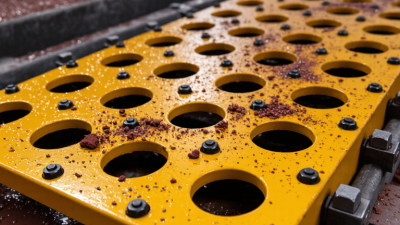
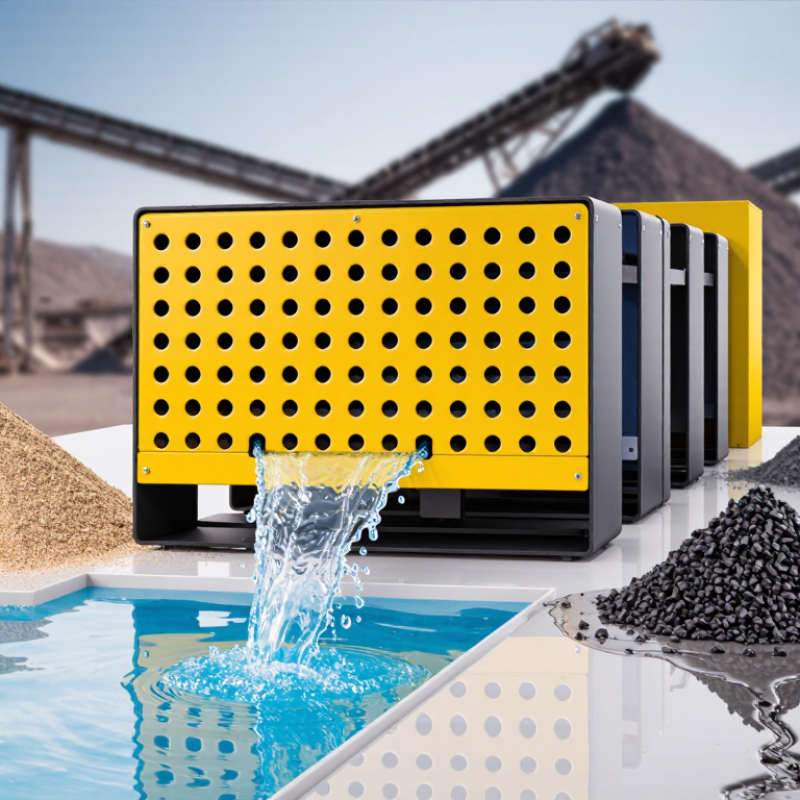
A PU dehydrated screen is a vibrating dewatering screen fitted with polyurethane screen panels. It removes water from wet sand, gravel, minerals, and other bulk materials. During operation, vibration moves solids across the inclined deck. Water passes through the small apertures, while the heavier material travels toward the discharge end.
Polyurethane offers strong abrasion resistance and flexible performance under repeated impact. It can also reduce noise compared with many steel screening surfaces.
In field use, panel aperture, deck angle, vibration force, and feed moisture must match the application. A small change in moisture can affect drainage noticeably. This is where selection becomes less simple.
The screen should not be judged by capacity alone. Buyers should request aperture details, panel hardness, wear data, and operating recommendations.
Inspect the panels regularly for blocked openings, loose fasteners, and uneven wear. A damaged section may reduce drainage before the problem becomes visible. PU is durable, not indestructible. Highly abrasive feed can still shorten its service life. Test samples are valuable, although they cannot fully reproduce every site condition. Feedback from operators often reveals practical issues that laboratory figures miss.
What Materials and Designs Define PU Screens?
A PU dehydrated screen combines a cast polyurethane working surface with steel reinforcement or embedded tension elements. The polyurethane usually ranges from medium to high hardness, often about 70–95 Shore A. Softer grades absorb impact better, while harder grades resist cutting and compression. The choice is not automatic. Wet sand, crushed stone, and coal can demand different formulations.
Screen design matters as much as chemistry. Modular panels may use pin, hook, or bolt-down connections. Tapered apertures help particles pass through instead of wedging. Slotted openings improve drainage, while staggered profiles reduce blinding under wet feed. Some panels include thicker impact zones near the feed end. Small details matter here.
The U.S. Geological Survey’s Mineral Commodity Summaries 2024 estimated U.S. crushed-stone output at roughly 1.5 billion metric tons in 2023. That volume explains why wear life and fast replacement remain practical purchasing concerns. The International Energy Agency’s Global Critical Minerals Outlook 2024 also highlights rising mineral-processing pressure from expanding supply chains. PU screens support that pressure through lower mass, corrosion resistance, and quieter operation.
Still, a PU panel can fail early. Incorrect aperture size, excessive feed impact, or poor tension may damage even a well-made screen. Field experience suggests checking moisture, particle shape, bed depth, and screen inclination before selecting hardness. This step is often skipped. It should not be.
Why Are PU Dehydrated Screens Suitable for Global Buyers?
Global buyers need screening equipment that performs across different ores, climates, and plant layouts. PU dehydrated screens suit this need because their modular panels resist abrasion and handle repeated contact with wet material. In field use, operators often notice cleaner discharge and fewer blocked apertures after heavy rainfall. Small details matter.
The scale of demand is significant. The USGS Mineral Commodity Summaries 2024 estimated global iron ore mine production at about 2.5 billion metric tons in 2023. The UNEP Global Resources Outlook 2024 also projects global resource extraction could rise by 60% by 2060. These figures explain why buyers increasingly value durable, water-efficient screening solutions. PU panels can support dewatering by removing free water while retaining saleable solids, especially when aperture size matches the feed gradation.
However, PU is not automatically the best choice. Very sharp rock, high temperatures, or incorrect tension can shorten panel life. Buyers should verify hardness, panel thickness, open area, and fastening dimensions with test samples. A screen that works well in a quarry may perform differently in a sand plant. This is where supplier data, operating records, and independent inspection become important. Performance claims should be measured, not simply repeated.
Why Choose a PU Dehydrated Screen for Global Buyers?
Polyurethane screen panels are widely selected for dewatering applications because they combine abrasion resistance, lower noise, reduced weight, and flexible installation. The chart below shows representative engineering ranges for polyurethane screen panels compared with conventional steel panels, where a steel reference value is set at 100.
The values are representative industry benchmarks rather than brand-specific claims. Actual performance depends on polyurethane formulation, screen aperture, feed material, moisture content, vibration settings, and operating conditions.
 No. 14, Building 2, No. 367 Beijing Road, Chengdu Economic and Technological Development Zone (Longquanyi District)