Leave Your Message

5 Best 5 Stack Screens for Global Buyers?

Choosing the right 5-Stack Screen is rarely as simple as comparing prices or deck numbers. Global buyers face different materials, climates, power systems, and service expectations. A screen that performs well in a dry quarry may struggle with damp aggregate, sticky ore, or high-altitude operation.

H. William Derrick Jr., a respected figure in screening technology, once stated, “Screening is the art of separating particles by size.” That principle still matters. Effective equipment must deliver accurate separation, stable throughput, and practical maintenance access. It should also match the feed size, moisture level, desired capacity, and installation space.

This guide examines five leading 5-Stack Screen options for international purchasers. The comparison considers screening efficiency, deck design, vibration control, wear resistance, energy demand, and manufacturer support. It also reviews less visible details, such as spare-part availability, commissioning guidance, and documentation for local operators.

Real conditions can be messy.

Specifications may not tell the whole story. A machine with impressive capacity can underperform when feed distribution is uneven. A lower-priced model may create higher costs through frequent media replacement or delayed technical support. These risks deserve honest attention.

The selected screens are not perfect for every plant. One may offer stronger fine screening, while another may provide easier cleaning or better adaptability. Buyers should verify test results with their own material before signing a purchase order. That step is sometimes skipped. It should not be.

5 Best 5 Stack Screens for Global Buyers?

What Are 5-Stack Screens and How Do They Work?

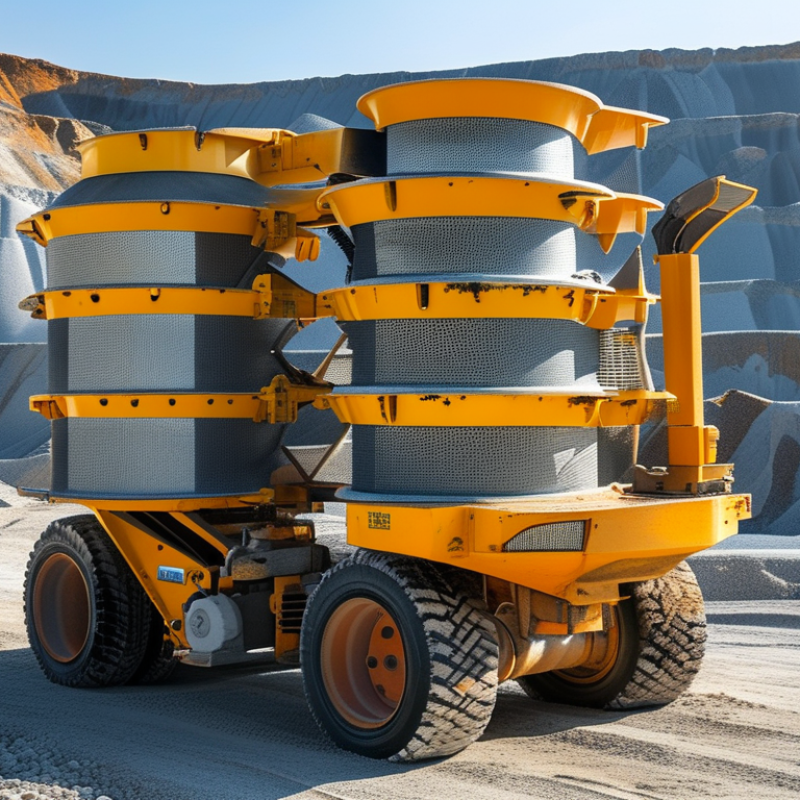
A 5-stack screen is a screening machine arranged with five layers of mesh or perforated plates. Each layer separates material by size. Larger particles remain on the upper deck, while smaller particles pass downward. Vibration keeps the material moving across every surface. This creates several product grades during one continuous operation.

The machine usually includes a feed inlet, vibrating body, five screening decks, discharge outlets, springs, and a drive system. Mesh openings should become smaller through the stack. However, this arrangement is not universal. Some materials need a different sequence. Moist or sticky material may block fine openings and reduce accuracy. Dry, free-flowing material normally produces cleaner separation.

In equipment evaluations, I check capacity, particle size, moisture, noise, power supply, and available floor space. These details matter more than the phrase “best five-stack screen.” A buyer should request test data using comparable feed material. Ask about screen replacement time, cleaning access, bearing protection, and spare-part availability. For global purchasing, confirm electrical specifications, safety documentation, packing strength, and local service support. Small details count.

A five-layer design can save space. It can also increase maintenance demands. That trade-off deserves careful review. I would not select a machine from capacity figures alone. Real performance may change with humidity, feed consistency, and operator settings. A short material trial often reveals problems that a polished specification sheet hides.

Key Features Global Buyers Should Compare Before Purchasing

5 Best 5 Stack Screens for Global Buyers?

When comparing a five-stack screen, begin with screening accuracy and usable capacity. Ask for test results using material similar to yours. A clean sample matters. Mesh openings should match the required particle range, not only the supplier’s standard chart. Check deck design, screen tension, and access for cleaning. These details affect output during long shifts.

Motor power and vibration control deserve careful comparison. Confirm the operating voltage, frequency, and phase for your location. A machine may perform well in a factory video but fail after incorrect electrical conversion. Review noise levels, bearing protection, and emergency-stop access. Strong frames and corrosion-resistant surfaces help in humid or dusty environments. I would also request photographs of welds and maintenance points. Small construction details often reveal real manufacturing quality.

Global buyers should examine documentation, packaging, spare-part availability, and service response times. Ask whether manuals include clear diagrams and local electrical guidance. Confirm crate dimensions, gross weight, customs documents, and delivery terms before payment. A longer warranty sounds useful, but repair procedures matter more. Request a written list of excluded parts. I have seen buyers focus on capacity and overlook cleaning time. That choice can become expensive. Product selection is rarely perfect, so leave room for operator training and future material changes.

5 Best 5K Screen Profiles for Global Buyers

This comparison uses representative published specifications for common 5K and 5K2K display configurations. Brightness is measured in nits, while refresh rate is measured in hertz. Buyers should also compare resolution, screen size, USB-C power delivery, color coverage, connectivity, warranty terms, and regional voltage compatibility.

Five Top 5-Stack Screen Options for Different Applications

A five-stack screen can sort several particle sizes in one compact process. The right design depends on feed moisture, capacity, and final product goals. A heavy-duty inclined five-deck screen suits crushed stone and large aggregate. Its steep angle helps material move quickly, while reinforced panels handle repeated impact. A horizontal five-deck screen offers more accurate separation for dry sand, gravel, and recycled materials. It needs careful leveling, though.

For wet sand, a five-deck dewatering screen is often more practical. It removes excess water before stockpiling and reduces transport weight. A high-frequency five-stack screen works well with fine minerals and manufactured sand. Its rapid vibration improves separation, but excessive speed can increase wear. For mixed or sticky feed, a modular five-deck screen with flexible panels allows easier maintenance. This option is useful when material changes often. Still, flexible panels may not last as long under heavy impact.

Tips: Check the largest feed size before choosing the deck openings. Ask for test results using your actual material, not only standard samples. Inspect vibration levels, noise control, panel access, and replacement-part availability. Leave enough space around the machine for safe cleaning and maintenance. In real projects, buyers sometimes focus on capacity and overlook moisture changes. That can create blockages later. A slightly slower screen may deliver cleaner products and steadier operation. There is no perfect setup. Careful testing remains essential.

5 Best 5-Stack Screens for Global Buyers? - Five Top 5-Stack Screen Options for Different Applications

Technical comparison of common five-deck screening configurations for aggregates, mining, recycling, and mineral processing

5-Stack Screen Option Operating Motion Best Application Typical Screen Area Typical Feed Size Typical Capacity Typical Aperture Range Key Strength Main Limitation
Inclined Circular-Vibration Five-Deck Screen Inclined circular motion with gravity-assisted material flow Crushed stone, sand, gravel, and general aggregate classification Approximately 7–30 m² total screening area Up to approximately 200–250 mm, depending on deck design Approximately 50–800 t/h About 0.5–100 mm Strong versatility, simple layout, and effective separation across multiple size fractions Less suitable for very wet, sticky, or clay-rich feed without additional material conditioning
Horizontal Linear-Vibration Five-Deck Screen Linear motion generated by synchronized unbalanced exciters Mining, manufactured sand, recycled aggregate, and controlled-size classification Approximately 8–36 m² total screening area Up to approximately 150–200 mm, subject to feed preparation Approximately 40–700 t/h About 0.3–80 mm Good conveying control, accurate sizing, and relatively low installation height Requires careful balancing, level installation, and suitable feed distribution
Banana-Deck Five-Stack Screen Multi-slope screening surface with changing inclination along the deck High-volume iron ore, coal, aggregates, and other bulk materials Approximately 15–60 m² total screening area Up to approximately 300 mm with suitable scalping and feed control Approximately 300–2,000 t/h About 1–100 mm High throughput and efficient stratification under heavy material loading Larger footprint, higher structural requirements, and more complex deck arrangement
High-Frequency Five-Deck Screen High-frequency, low-amplitude vibration for fine-particle separation Fine sand, silica products, industrial minerals, and final product sizing Approximately 5–25 m² total screening area Usually below 10–20 mm Approximately 5–150 t/h About 0.075–10 mm High separation efficiency and compact design for fine screening Not intended for large feed or heavy impact loading; blinding can occur with damp material
Dewatering Five-Deck Screen Configuration Linear vibration with a rising discharge angle and drainage-focused deck design Washed sand, gravel, coal, mineral concentrates, and wet-process products Approximately 8–32 m² total screening area Typically below 50 mm after preliminary sizing Approximately 30–400 t/h of wet feed About 0.5–25 mm Reduces free water while separating saleable material into several size fractions Usually requires spray-water management, drainage collection, and wear-resistant panels
Data note: Figures are representative engineering ranges for five-deck screening systems. Actual capacity, feed size, screening area, and aperture selection depend on material density, moisture, clay content, feed distribution, deck media, inclination, and required separation accuracy.

How to Evaluate Quality, Capacity, and Operating Performance

5 Best 5 Stack Screens for Global Buyers?

How to Evaluate Quality, Capacity, and Operating Performance

A five-stack screen should be judged by measurable results, not a polished product sheet. Check the frame welds, screen tension, bearing housing, and access points during inspection. Clean weld beads and even bolt spacing often indicate better assembly control. Ask for material certificates, factory test records, and vibration data. These documents do not guarantee performance, but missing records create avoidable risk.

Capacity depends on material type, moisture, feed size, and deck opening. A screen processing dry stone may struggle with damp sand. Request a test using your actual feed, not a convenient sample. Measure tons per hour, oversize carryover, and the percentage passing each deck.

Operating performance also includes noise, energy use, start-up stability, and maintenance time. A machine can reach its rated capacity briefly, yet perform poorly during a twelve-hour shift. That difference matters.

Tips: Inspect one completed unit before ordering multiple machines. Compare test results under similar conditions. Confirm spare screen panels, bearing specifications, lubrication intervals, and local service support. Use an independent inspector when possible. I have seen buyers focus too heavily on price and overlook difficult panel replacement. That was expensive. A smaller capacity buffer may also be wiser than running at the maximum rating every day. Test real conditions.

International Buying Factors: Pricing, Shipping, and After-Sales Support

5 Best 5 Stack Screens for Global Buyers?

When comparing five-stack screen systems, global buyers should calculate the landed cost, not only the listed price. A cheaper unit may require costly crating, customs handling, or local installation. Ask for a commercial invoice, packing dimensions, gross weight, and shipping terms before payment. I also check whether the quoted price includes screens, clamps, tools, and protective packaging. Missing accessories can quickly change the budget.

Shipping details deserve practical attention. A five-stack system may arrive in a narrow crate, but its working area still needs enough room for operation. Confirm delivery to the exact address, unloading requirements, and estimated transit time. Sea freight usually reduces cost for heavy equipment, while air freight may suit urgent replacement parts. Delays happen. Build extra time into your production plan.

After-sales support often separates a reliable purchase from a frustrating one. Look for clear warranty coverage, illustrated manuals, remote troubleshooting, and access to replaceable parts. Ask how quickly technical questions receive answers, preferably in writing. A short demonstration video can reveal adjustment steps better than a vague brochure. I once focused too heavily on the initial price and overlooked response time; that mistake made a small issue feel expensive. Buyers should also confirm voltage compatibility and request references from customers in similar regions.