The 10 Best Fine Mesh Metals for Industrial Applications?
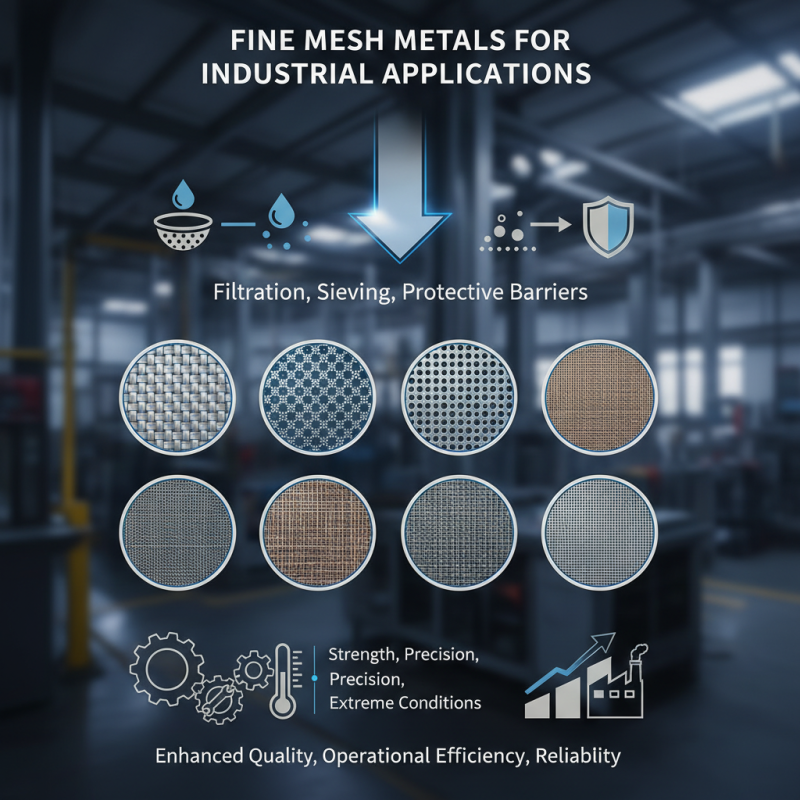
In the realm of industrial applications, selecting the right materials is crucial. Fine Mesh Metals play a significant role in various sectors, from aerospace to manufacturing. Their unique properties make them ideal for filtration, sieving, and protective barriers.
These metals are designed to withstand extreme conditions. They offer strength and precision in design, ensuring effective performance. Fine Mesh Metals can enhance product quality and operational efficiency. This reliability is essential in high-stakes environments.
However, choosing the best type of fine mesh can be challenging. Each material has its advantages and limitations. Proper understanding is critical in making an informed decision. Investigating different fine mesh options provides valuable insights for industry professionals.
The Role of Fine Mesh Metals in Various Industrial Applications
Fine mesh metals play a crucial role in a variety of industrial applications. Their ability to filter particles or liquids with precision makes them invaluable in sectors like pharmaceuticals, food processing, and mining. Fine mesh metals are designed to enhance efficiency and maintain quality standards. They help in separating unwanted materials, ensuring that only the desired elements remain.
Using fine mesh metals can also lead to some challenges. For example, the choice of material and mesh size must be suitable for specific tasks. Selecting the wrong mesh could result in inadequate filtration, leading to compromised processes. Industries often conduct tests to ensure optimal performance.
Tips: Always consider the application carefully. Evaluate the required mesh size and material properties before making a decision. Regular maintenance is crucial, as wear over time can affect functionality. Stay updated with technological advancements in mesh materials to enhance efficiency and reliability.
The 10 Best Fine Mesh Metals for Industrial Applications
Top 10 Fine Mesh Metal Materials: Properties and Performance Data
Fine mesh metals play a crucial role in various industrial applications. These materials are designed to allow liquids and gases to pass through while filtering out unwanted particles. This filtering capability is essential in sectors like pharmaceuticals and food production. The choice of fine mesh materials impacts efficiency and safety in the manufacturing process.
Stainless steel is often favored for its durability and corrosion resistance. It excels in high-temperature environments, which can be a challenge for other materials. Aluminum mesh is lightweight yet strong, making it suitable for applications where weight is a concern. Nickel alloys offer excellent resistance to harsh chemicals, but they may be more expensive than other options.
Though many fine mesh metals show promise, imperfections can arise in specific applications. The mesh size may not always align with the desired filtration level. Regular maintenance and monitoring are crucial to avoid breakdowns. Each material's performance can vary based on environmental factors and usage conditions. Therefore, selecting the right fine mesh metal requires careful consideration of all variables involved.
Comparative Analysis of Mesh Sizes and Their Industrial Uses
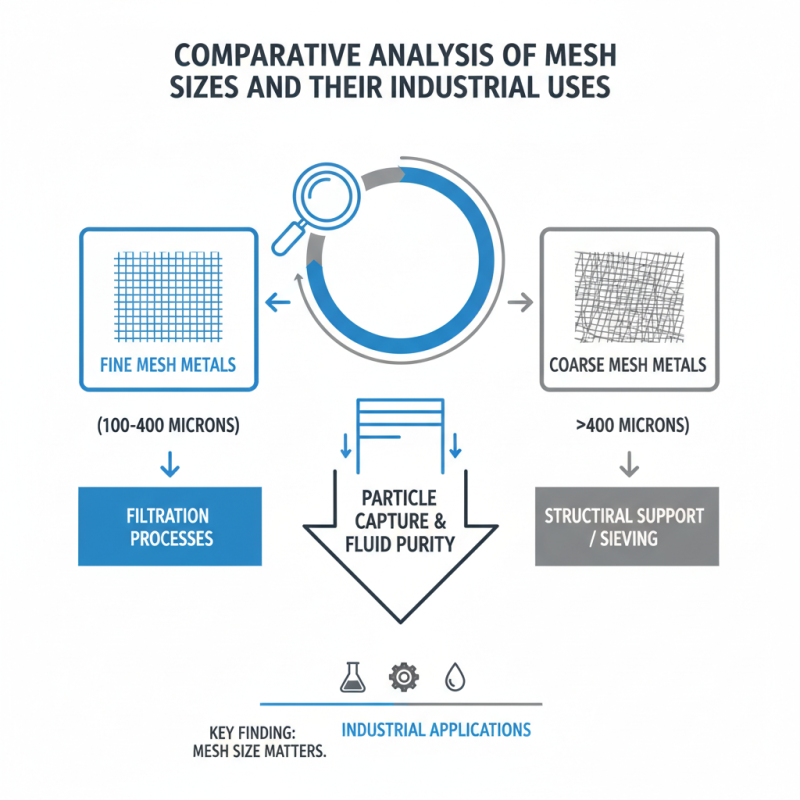
The selection of fine mesh metals for industrial applications is crucial. Different mesh sizes serve unique industrial needs. A recent report highlights that metals with mesh sizes ranging from 100 to 400 microns are widely used in filtration processes. These sizes effectively capture particles, ensuring fluid purity.
For example, a 200-micron mesh is commonly employed in food processing. This mesh size balances flow rate and filtration efficiency. In contrast, a 300-micron mesh is often utilized in pharmaceutical manufacturing, where strict contamination control is vital. However, the choice of mesh size can significantly impact production efficiency and equipment longevity.
Understanding these nuances is essential. A fine mesh too small may clog, leading to costly downtime. Conversely, a mesh too large might fail to filter adequately, compromising product quality. Each application warrants careful consideration of its specific requirements and potential drawbacks. Data suggests that improper mesh size selection can increase operational costs by up to 15%. This underscores the importance of thorough analysis before implementation.
Industry Standards for Fine Mesh Metals: ASTM and ISO Guidelines
When working with fine mesh metals, understanding industry standards is crucial. Organizations like ASTM and ISO develop guidelines that ensure quality and performance. These standards help manufacturers create materials that meet specific criteria for strength, durability, and functionality.
ASTM standards detail specifications for various mesh types, including wire diameters and opening sizes. Each metal type, such as stainless steel or bronze, has its own standard. Following these guidelines guarantees the metals will perform under industrial conditions. ISO standards complement ASTM by providing international benchmarks, promoting consistency across borders.
However, not all manufacturers comply with these standards. This raises concerns about the reliability of some products in the market. Quality control processes vary widely, making it vital for buyers to verify compliance with ASTM and ISO. Understanding these industry standards is essential, yet the voice of the consumer needs to be heard. Building awareness can lead to better practices in fine mesh metal production.
The 10 Best Fine Mesh Metals for Industrial Applications
| Metal Type |
Mesh Size (Microns) |
Thickness (mm) |
Tensile Strength (MPa) |
Typical Applications |
| Stainless Steel |
5-500 |
0.5 - 2.0 |
600-800 |
Food processing, filtration |
| Aluminum |
10-1000 |
0.3 - 1.5 |
500-700 |
Aerospace, automotive |
| Copper |
20-800 |
0.4 - 1.2 |
210-350 |
Electrical applications, cooling systems |
| Titanium |
5-300 |
0.5 - 2.0 |
900-1200 |
Medical devices, aerospace |
| Nickel |
15-500 |
0.3 - 0.8 |
500-950 |
Chemical processing, aerospace |
| Brass |
30-800 |
0.5 - 1.0 |
250-400 |
Musical instruments, plumbing |
| Carbon Steel |
5-400 |
0.5 - 2.2 |
400-600 |
Construction, machinery |
| Bronze |
20-500 |
0.4 - 1.3 |
300-500 |
Marine applications, bearings |
| Zinc |
45-900 |
0.5 - 1.0 |
200-350 |
Coatings, galvanization |
| Mild Steel |
10-200 |
0.5 - 3.0 |
250-500 |
General construction, automotive |
Future Trends in Fine Mesh Metal Applications Within Industrial Sectors
Fine mesh metals are gaining traction across various industrial sectors. Their versatile applications span filtration, separation, and structural support. According to a recent report by Markets and Markets, the fine mesh market is projected to grow by 7.2% annually through 2025. This growth reflects a rising demand for efficient materials in sectors such as aerospace, automotive, and pharmaceuticals.
The trend towards automation and digitization in manufacturing is shaping the use of fine mesh metals. Industries are increasingly adopting these materials for precision components. Data from the Global Industry Analysts suggests that advancements in manufacturing technology will enhance performance, leading to a greater reliance on fine mesh solutions. However, challenges remain. Ensuring consistent quality and meeting stringent regulations can complicate production processes.
Sustainability is also pressing against traditional mesh production methods. More industries are exploring eco-friendly materials to balance performance and environmental impact. A survey from the Industrial Fabric Association International showed that over 40% of companies are investing in sustainable materials. This shift may lead to innovative designs but also raises questions about the durability of these alternatives. The future of fine mesh metals lies in their ability to address both performance demands and sustainability concerns.
 No. 14, Building 2, No. 367 Beijing Road, Chengdu Economic and Technological Development Zone (Longquanyi District)