China Top 10 Fine Mesh Metals for Industrial Applications
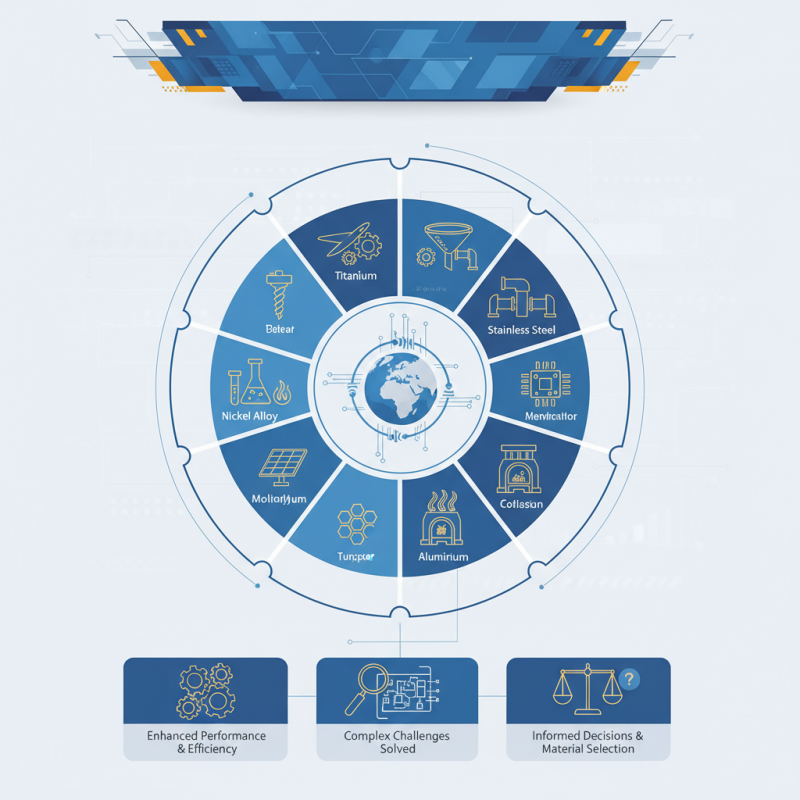
Fine Mesh Metals play a crucial role in various industrial applications. These materials offer unique properties that enhance performance and efficiency. By understanding the top ten fine mesh metals used in China, industry professionals can make informed decisions.
The demand for fine mesh metals is growing across multiple sectors. From aerospace to medical technology, they provide solutions to complex challenges. Different metals have distinct characteristics, influencing their suitability for specific uses. Each metal contributes to durability, filtering, and structural integrity.
This exploration highlights the importance of fine mesh metals in modern engineering. However, choosing the right type can be challenging. It requires careful consideration of factors like compatibility and application requirements. Understanding these nuances is essential for optimal results.
China's Leading Fine Mesh Metals: An Overview
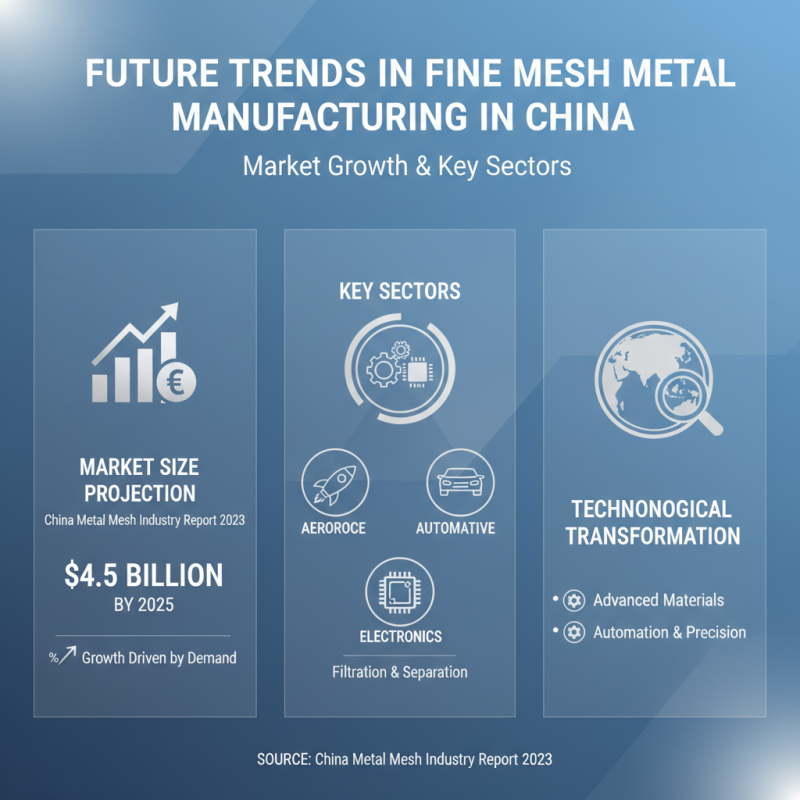
China's fine mesh metals are crucial in various industrial applications. These materials commonly include stainless steel, copper, and aluminum. The demand for fine mesh metals in industries like filtration and sieving has been steadily increasing. According to recent market reports, the fine mesh metal market in China is projected to grow at a compound annual growth rate (CAGR) of 5.2% from 2023 to 2030.
Stainless steel meshes are particularly favored for their durability. They resist corrosion, making them ideal for applications in food processing and pharmaceuticals. Copper meshes also see usage in electrical applications due to their excellent conductivity. However, manufacturers face challenges in sourcing high-quality raw materials. This affects product consistency and can impact overall performance.
Despite the growth potential, the industry must address sustainability issues. Many metal producers are under scrutiny for their environmental practices. Innovative recycling processes for fine mesh metals could be a solution. Reports indicate that raw materials recovery could reduce costs by up to 15%. Adopting such practices will not only improve reliability but also enhance brand image in a competitive market.
China Top 10 Fine Mesh Metals for Industrial Applications
This chart represents the market share and use of various fine mesh metals in industrial applications across China.
Key Properties of Fine Mesh Metals Used in Industry
Fine mesh metals play a crucial role in various industrial applications. These materials are characterized by their small openings, providing unique benefits. Key properties, such as corrosion resistance, durability, and filtration efficiency, make fine mesh metals ideal for industries ranging from aerospace to food processing. According to a recent industry report, the global demand for fine mesh metals is projected to reach $2.5 billion by 2025, driven by increasing needs for precision in filtration systems.
The mechanical strength of fine mesh metals varies by material type. Stainless steel, for instance, offers excellent tensile strength and resistance to corrosion. Copper mesh, on the other hand, is favored for its antimicrobial properties. A study by the International Journal of Material Sciences highlighted that the use of fine mesh metals can reduce particle contamination by up to 80%. However, selecting the right mesh type requires expertise. Factors like mesh size, wire gauge, and application specifics must be considered.
Industries often face challenges when integrating fine mesh metals. While these materials can enhance product quality, they may also increase production complexity. Workers must be trained properly to handle these materials. Implementing fine mesh systems can lead to higher operational costs. The trade-offs between benefits and investment need careful assessment. Balancing these aspects ensures optimal performance and reliability in industrial applications.
China Top 10 Fine Mesh Metals for Industrial Applications - Key Properties of Fine Mesh Metals Used in Industry
| Metal Type |
Mesh Size (microns) |
Tensile Strength (MPa) |
Corrosion Resistance |
Typical Applications |
| Stainless Steel |
20 - 100 |
520 |
Excellent |
Food processing, pharmaceuticals |
| Aluminum |
50 - 200 |
310 |
Good |
Aerospace, automotive |
| Brass |
40 - 150 |
500 |
Moderate |
Electrical connectors, plumbing |
| Copper |
30 - 100 |
210 |
Fair |
Electronics, telecommunications |
| Titanium |
10 - 100 |
900 |
Excellent |
Aerospace, medical implants |
| Nickel |
15 - 80 |
480 |
Good |
Marine, chemical processing |
| Monel |
30 - 120 |
600 |
Excellent |
Oil and gas, marine |
| Palladium |
5 - 50 |
500 |
Excellent |
Catalysts, electronics |
| Silver |
10 - 50 |
210 |
Good |
Jewelry, electronics |
| Zinc |
50 - 200 |
250 |
Moderate |
Galvanizing, coatings |
Top 10 Fine Mesh Metals with Industrial Applications in China
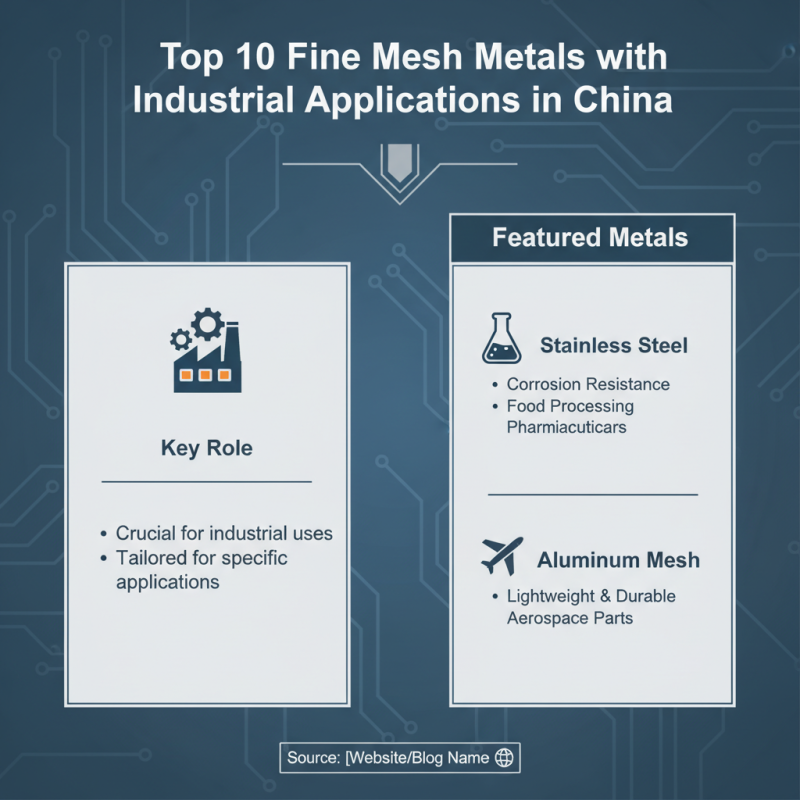
In the realm of industrial applications, fine mesh metals play a crucial role. China offers a variety of these materials, each tailored for specific uses. Stainless steel is popular for its excellent corrosion resistance. It’s often used in food processing and pharmaceuticals. Aluminum mesh is lightweight and durable, making it ideal for aerospace parts.
Another notable metal is brass, known for its excellent electrical conductivity. It’s frequently utilized in electrical and plumbing industries. Copper mesh is notable for its antimicrobial properties, which is valuable in hygiene-sensitive environments. Mild steel meshes are cost-effective and widely applied in construction. These materials vary in resilience, depending on their composition and manufacturing processes.
While these metals serve well in many applications, they also pose challenges. The balance between durability and weight can be tricky. Some meshes may not perform as expected under extreme conditions. Additionally, sourcing high-quality materials consistently can be problematic. Thus, understanding the specific needs of projects is essential. Manufacturers must remain vigilant in quality control to ensure reliable performance. The landscape of fine mesh metals in China continues to evolve, reflecting both innovation and the need for improvement.
Applications of Fine Mesh Metals in Various Industrial Sectors
Fine mesh metals serve as critical components in various industrial sectors. Their applications span across filtration, sieving, and screening processes. In pharmaceuticals, fine mesh metals ensure the purity of active ingredients. They are crucial in preventing contamination, enabling safe production. Without proper filtration, the product's efficacy may suffer. The accuracy of particle sizes is pivotal in achieving desired results.
In the food industry, fine mesh metals guarantee quality and safety. They are extensively used in screening grains and powders. This ensures that unwanted impurities are removed efficiently. The challenge lies in maintaining the integrity of the product while achieving effective separation. Many manufacturers face issues like clogs or wear, leading to reduced efficiency. Continuous improvement in mesh design can resolve some of these concerns.
The electronics sector utilizes fine mesh metals for component protection. They shield sensitive electronic parts from dust and debris. The mesh design must balance strength and permeability, a task that can be complex. Many engineers struggle with the trade-offs involved. Fine mesh metal proves its value, but its application requires constant reassessment of material choices and techniques.
 No. 14, Building 2, No. 367 Beijing Road, Chengdu Economic and Technological Development Zone (Longquanyi District)