Why is Fine Mesh Essential in Various Industries?
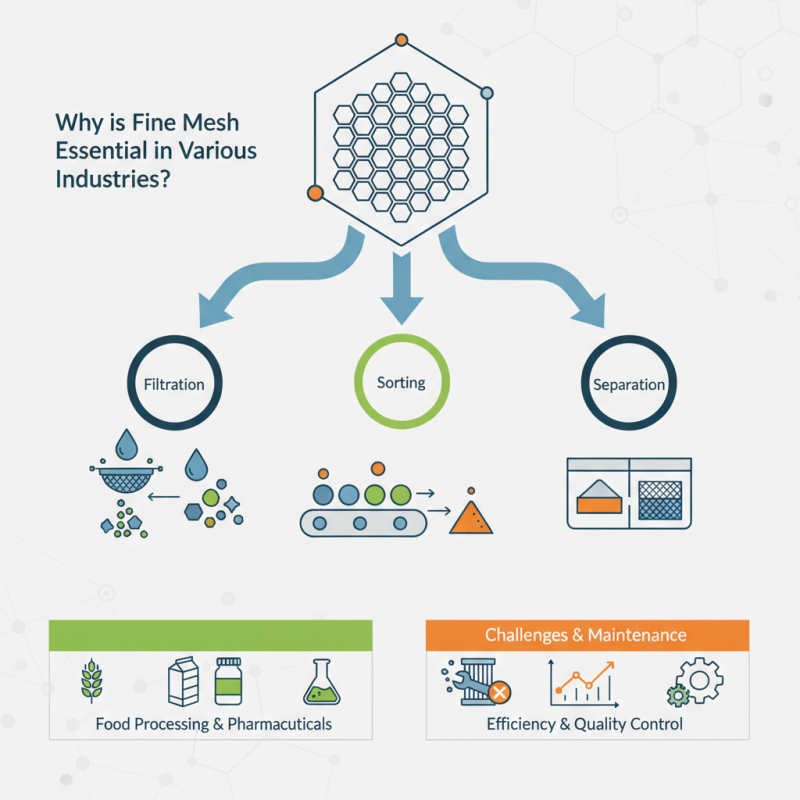
Fine mesh is a crucial component in many industries. It plays a significant role in filtration, sorting, and separation tasks. Various sectors, from food processing to pharmaceuticals, rely on fine mesh for efficiency and quality control. This material can help remove impurities and ensure product safety.
In the food industry, fine mesh screens are vital for sifting flour or retaining particles in juice production. These screens prevent unwanted materials from contaminating the final product. Similarly, in pharmaceuticals, fine mesh helps in precise ingredient measurement, which is essential for compliance with strict standards.
Despite its importance, using fine mesh can have challenges. Over time, fine mesh may wear out or clog. Regular maintenance is necessary to ensure optimal performance. Some businesses may overlook this, leading to potential risks in production. Even with its advantages, fine mesh usage requires constant reflection and adaptation to meet industry demands.
Importance of Fine Mesh in Industrial Applications
Fine mesh plays a crucial role in many industrial applications. Its versatility allows for filtration, separation, and protection. Different industries, such as food processing, pharmaceuticals, and manufacturing, rely heavily on fine mesh. It ensures high-quality products while maintaining safety standards. For instance, in the food industry, fine mesh prevents contaminants from entering food products. This steps up hygiene and trustworthiness.
Another significant application is in the pharmaceutical sector. Fine mesh screens are essential for precise ingredient separation. This allows for consistency in drug formulations. However, achieving the right mesh size can be challenging. Overly fine mesh may hinder the flow of materials. Conversely, a mesh that is too coarse may not filter adequately. This fine balance requires careful consideration and testing.
In manufacturing, fine mesh protects machinery from dust and debris. Equipment safety is paramount, yet mesh maintenance can be overlooked. Regular checks ensure they function properly. Failure to address issues could lead to costly downtime. As industries evolve, the importance of fine mesh will likely grow even more. Understanding and implementing proper use is vital for future advancements.
Applications of Fine Mesh in Food and Beverage Industries
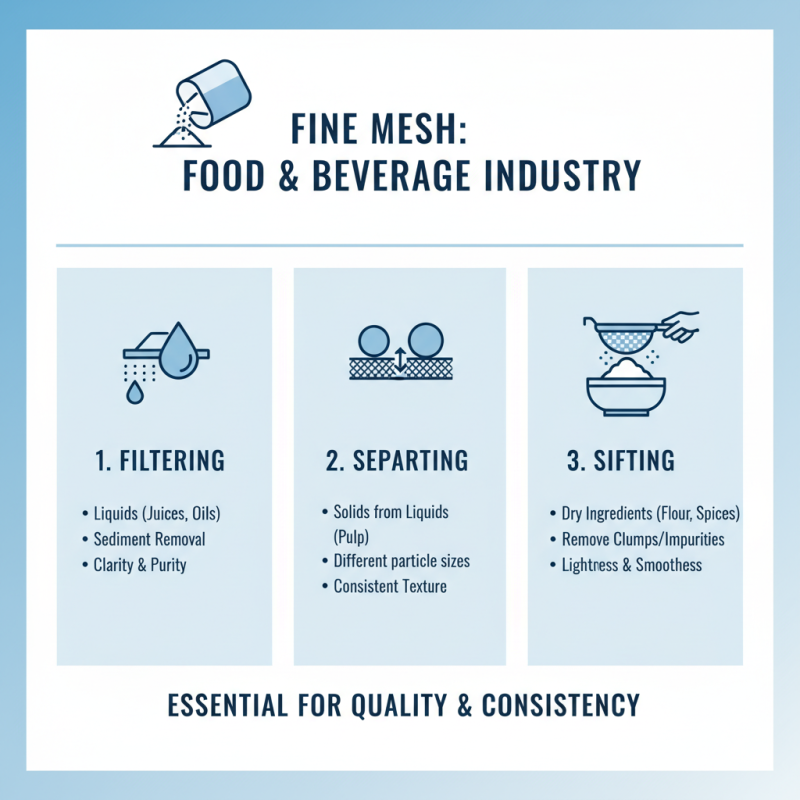
Fine mesh plays a crucial role in the food and beverage industry. It is commonly used for filtering, separating, and sifting various ingredients. For example, fine mesh sieves are vital for sifting flour to achieve a lighter texture. These fine meshes help remove impurities and clumps, ensuring a better end product.
In brewing, fine mesh filters are essential for separating solids from liquids. They enhance clarity and flavor. Chefs also use fine mesh in food preparation. It aids in creating sauces or emulsions, allowing for smooth consistency. Goggles are helpful if you're dealing with spicy ingredients while using fine mesh.
Tip: Always inspect your fine mesh for tears. A tiny hole can ruin the filtration process. Additionally, avoid pushing food too forcefully through the mesh. This can lead to unwanted debris making its way into your final product. Fine mesh is a simple tool that requires thoughtful handling. Proper maintenance will extend its lifespan and performance.
Role of Fine Mesh in Pharmaceutical Manufacturing Processes
Fine mesh plays a crucial role in pharmaceutical manufacturing. It ensures the correct particle size during various processes. In drug formulation, consistency is key. Fine mesh screens help achieve uniformity in powder blending. This leads to better drug performance and reduces variability.
When sorting substances, fine mesh prevents larger particles from contaminating the final product. It acts as a safeguard against impurities. Additionally, achieving proper filtration is vital. But, it's common to overlook the cleaning and maintenance of these systems. A neglected fine mesh can lead to inefficiencies.
Tips for effective use of fine mesh: always choose the right mesh size for your material. Regularly inspect and clean filtration equipment to avoid cross-contamination. Training staff on proper handling can significantly improve outcomes. It's easy to make mistakes, but learning from them is essential for improvement. Being proactive in these areas enhances quality control and boosts overall production efficiency.
Why is Fine Mesh Essential in Various Industries?
| Industry |
Application of Fine Mesh |
Benefits |
| Pharmaceutical |
Particle size reduction, filtration of active ingredients |
Improved bioavailability, enhanced product safety |
| Food Processing |
Separation of solids from liquids, ingredient blending |
Consistent product quality, compliance with hygiene standards |
| Chemical Manufacturing |
Catalyst recovery, impurity filtration |
Enhanced process efficiency, reduced contamination |
| Plastic and Polymer |
Material sorting, pelletizing |
Improved material quality, reduced waste |
| Mining and Metallurgy |
Separation of ore and waste material |
Increased recovery rates, operational efficiency |
Benefits of Fine Mesh in Chemical Processing and Filtration
Fine mesh plays a crucial role in chemical processing and filtration. It effectively separates unwanted particles from valuable materials. This is particularly important in industries like pharmaceuticals, where purity is key. Using fine mesh ensures that only the desired substances pass through, while contaminants are caught.
In filtration, fine mesh enhances efficiency. The small openings capture even the tiniest impurities. This leads to cleaner end products. However, challenges exist. Mesh can clog easily, requiring regular maintenance. Over time, wear and tear can affect performance. Users must constantly monitor for these issues to ensure the quality of the output.
Chemical reactions often produce by-products. Fine mesh helps manage these effectively. It enables continuous processes and reduces downtime. Yet, not all fine mesh options are equal. Some materials may degrade under harsh conditions, leading to potential risks. Careful selection is crucial to maximize benefits and minimize drawbacks.
Benefits of Fine Mesh in Chemical Processing and Filtration
Impact of Fine Mesh on Environmental and Waste Management Solutions
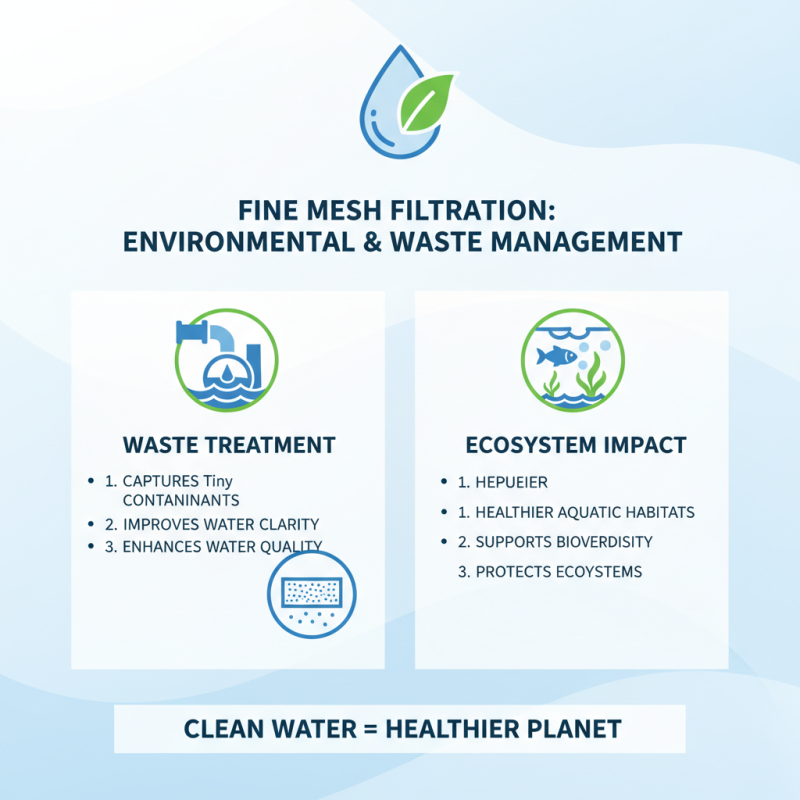
Fine mesh plays a pivotal role in environmental and waste management. Its ability to filter out tiny particles makes it essential for various processes. In waste treatment, fine mesh screens capture contaminants. This improves water clarity and quality. Effective filtration has significant effects on ecosystems. Cleaner water means healthier habitats for aquatic life.
In landfills, fine mesh contributes to managing leachate. It helps prevent the spread of toxic substances. However, challenges persist. Mesh wear and tear can reduce effectiveness. Regular maintenance is crucial yet often overlooked. Careful monitoring is needed to ensure optimum performance. Fine mesh also plays a role in recycling. It captures small materials that would otherwise be discarded. This promotes resource recovery, a vital step toward sustainability.
Despite these benefits, not all systems are optimal. Many facilities still struggle with inadequate mesh solutions. This can lead to increased waste and pollution. Continuous adaptation of fine mesh technology is necessary. While it presents challenges, fine mesh is indispensable for effective waste management.
 No. 14, Building 2, No. 367 Beijing Road, Chengdu Economic and Technological Development Zone (Longquanyi District)