Why is Fine Mesh Essential for Optimal Filtration?
Fine Mesh plays a critical role in the filtration industry. According to expert Dr. Emily Carter, "The right filter mesh can make or break the quality of your product." This statement highlights the importance of selecting the appropriate mesh size for specific applications. Fine Mesh ensures that particles are efficiently separated from liquids and gases, leading to higher purity levels.
In various industries, from pharmaceuticals to food processing, Fine Mesh filters are vital. They prevent contamination and maintain product integrity. However, some overlook the significance of mesh quality. A poor choice of mesh can lead to filtration issues. This can affect production processes and ultimately harm the end product.
Consider an example from the beverage industry. If a brewery uses an inadequate Fine Mesh filter, the finished beer may contain unwanted particles. This could negatively impact flavor and customer satisfaction. Thus, investing in the right Fine Mesh is essential. It is crucial for achieving optimal filtration while ensuring consistency and quality in production.
Understanding the Role of Fine Mesh in Filtration Systems
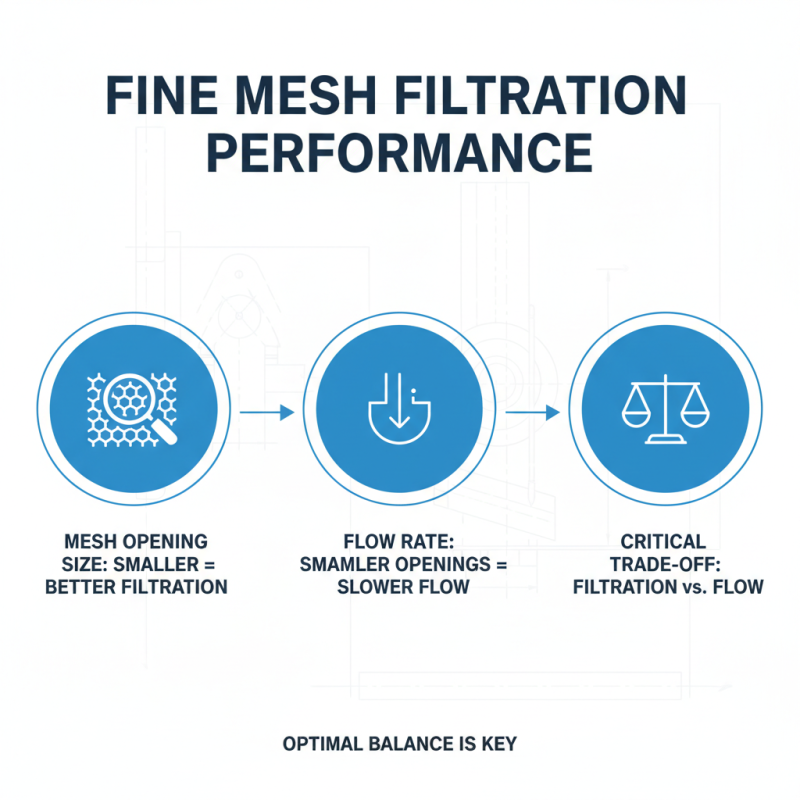
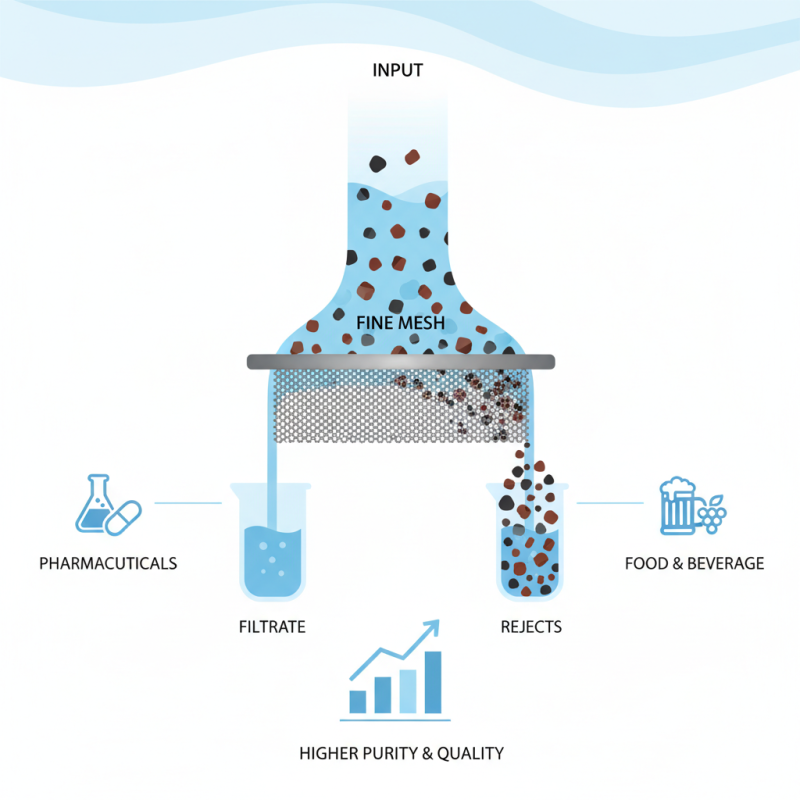
Fine mesh plays a vital role in filtration systems. It consists of tightly woven fibers that capture small particles effectively. The mesh size can vary, but the finer the mesh, the better the filtration. For instance, in water treatment, fine mesh captures sediments, algae, and even some bacteria. This leads to cleaner, safer water.
However, using fine mesh comes with challenges. It can clog quickly, requiring regular maintenance. This is a significant drawback. Clogged filters reduce flow rates and efficiency. Users must be diligent in monitoring the mesh’s condition. Additionally, while fine mesh traps more impurities, it may also restrict flow. Balancing filtration quality and flow rate takes careful consideration.
Understanding how fine mesh functions in filtration helps optimize performance. It enhances the filtration process, ensuring the desired results. Filters should be selected based on the specific needs of the application. Inadequate mesh choices can lead to ineffective filtration. Therefore, evaluating the filtration system's requirements is essential for achieving optimal results.
Types of Fine Mesh Materials Used in Filtration
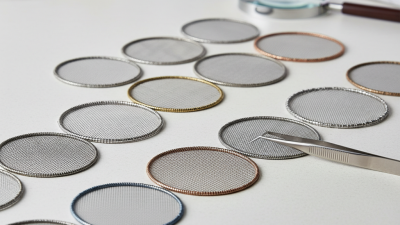
Fine mesh materials play a crucial role in filtration systems. Different types of fine mesh are utilized based on the specific requirements of the filtration process. Commonly used materials include stainless steel, nylon, and polyester. Each has unique properties that make it suitable for certain applications.
Stainless steel mesh is durable and resistant to corrosion. It’s ideal for high-temperature or high-pressure environments. Nylon mesh, on the other hand, is lightweight and flexible. It’s often used in applications where chemical resistance is key. Polyester mesh has excellent strength and can withstand harsh conditions, making it popular in various industrial settings.
Choosing the right type of fine mesh is critical. The wrong selection can result in ineffective filtration. It may lead to clogs or reduced flow rates. The intricacies of each material can be overwhelming. Often, a balance between strength and filtration efficiency must be struck. Understanding these nuances is essential for optimized filtration.
Key Benefits of Using Fine Mesh for Optimal Filtration
Fine mesh is crucial for achieving optimal filtration. It enhances the filtration process, ensuring that even the smallest particles are effectively captured. This is especially important in applications such as brewing and chemical processing, where purity is key. Fine mesh allows for more precise filtration, making it suitable for both liquid and solid separation.
One key benefit of fine mesh is its ability to improve the clarity of filtered substances. By removing tiny impurities, it enhances the quality of the final product. This is vital in food and beverage industries where consumer trust hinges on quality. Using fine mesh can also reduce maintenance needs for machinery. Fewer particles lead to less wear and tear, prolonging equipment lifespan.
**Tip:** Always select the correct mesh size for your specific application. A mesh that's too fine may slow down the process, while one that's too coarse might let impurities through. Regular inspection of the mesh is important. Check for tears and wear to maintain filtration efficiency. Sometimes, a simple change can lead to significant improvements.
Why is Fine Mesh Essential for Optimal Filtration? - Key Benefits of Using Fine Mesh for Optimal Filtration
| Benefit |
Description |
Application Areas |
| Improved Filtration Efficiency |
Fine mesh materials can capture smaller particles, providing a more thorough filtration. |
Water treatment, chemical processing |
| Enhanced Durability |
Fine mesh often utilizes robust materials, increasing its lifespan even under pressure. |
Industrial filtration, environmental applications |
| Versatility |
Can be used in various applications, accommodating different particle sizes and types. |
Food and beverage processing, pharmaceuticals |
| Cost-effectiveness |
Reduces maintenance and replacement costs by minimizing filter clogging and ensuring prolonged use. |
Manufacturing, aerospace |
| Customization |
Fine mesh can be produced in a variety of materials and configurations to meet specific filtration needs. |
Custom filtration systems, specialized industrial use |
Common Applications of Fine Mesh in Various Industries
Fine mesh plays a crucial role in multiple industries. Its key function is to ensure optimal filtration. In the food industry, fine mesh is widely used. A recent report indicates that 70% of food processing facilities rely on high-quality filtration. This is vital for removing impurities during production. Without fine mesh, contaminants could compromise food safety.
In the pharmaceutical sector, fine mesh helps in drug formulation. A study shows that 65% of pharmaceuticals require precise filtration for active ingredients. This ensures product consistency and efficacy. Moreover, fine mesh prevents unwanted particles from entering products, which is critical for patient safety. However, not all companies utilize this technology effectively. Some overlook its importance, leading to costly production errors.
Fine mesh is also common in water treatment. According to industry data, 80% of water plants use fine mesh to filter pollutants. This process is essential for providing clean drinking water. Yet, many facilities still struggle with maintenance. Poor upkeep can lead to mesh degradation. Such oversight reflects a lack of understanding of filtration's significance. Fine mesh improves the process, but it requires proper management.
 No. 14, Building 2, No. 367 Beijing Road, Chengdu Economic and Technological Development Zone (Longquanyi District)