Leave Your Message

Why Choose Mdi Pu Tension Screen for Your Projects?

In the construction and manufacturing industries, effective screening solutions are vital. Mdi Pu Tension Screen stands out as a robust option for various projects. Its unique properties enhance performance while addressing specific needs.

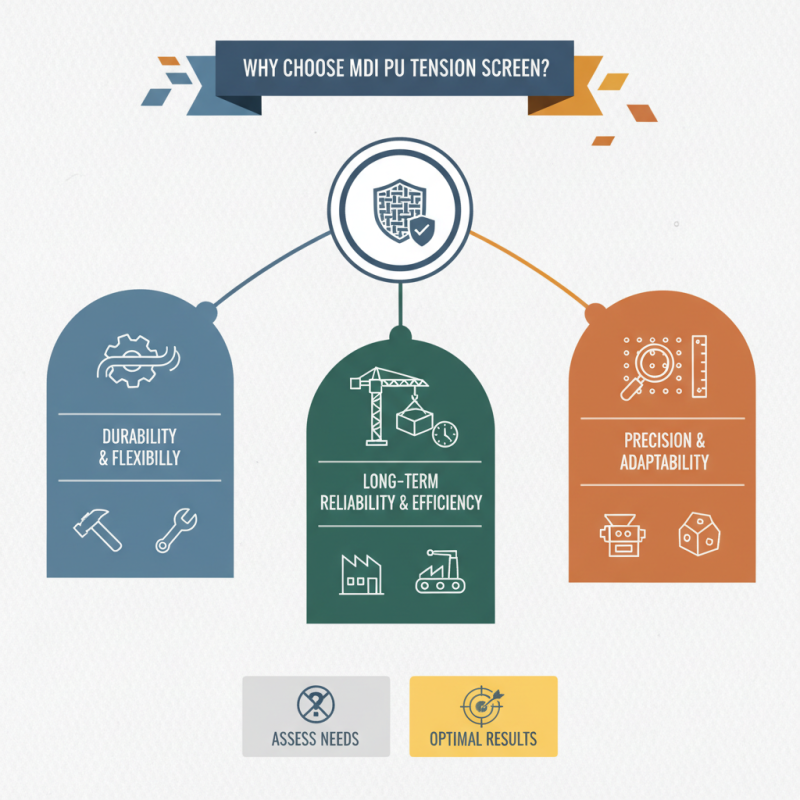
Choosing Mdi Pu Tension Screen ensures durability. This screen withstands harsh conditions, providing reliable service over time. It combines strength with flexibility, allowing for diverse applications. Projects demanding efficiency benefit significantly from its design.

However, some users may overlook its advantages. Not all applications require high-performance screens. It's crucial to assess the specific needs of your project. Mdi Pu Tension Screen excels in scenarios needing precision and longevity. Rethink your choices and consider this solution for optimal results.

Why Choose Mdi Pu Tension Screen for Your Projects?

Benefits of MDI PU Tension Screens in Construction Projects

Why Choose Mdi Pu Tension Screen for Your Projects?

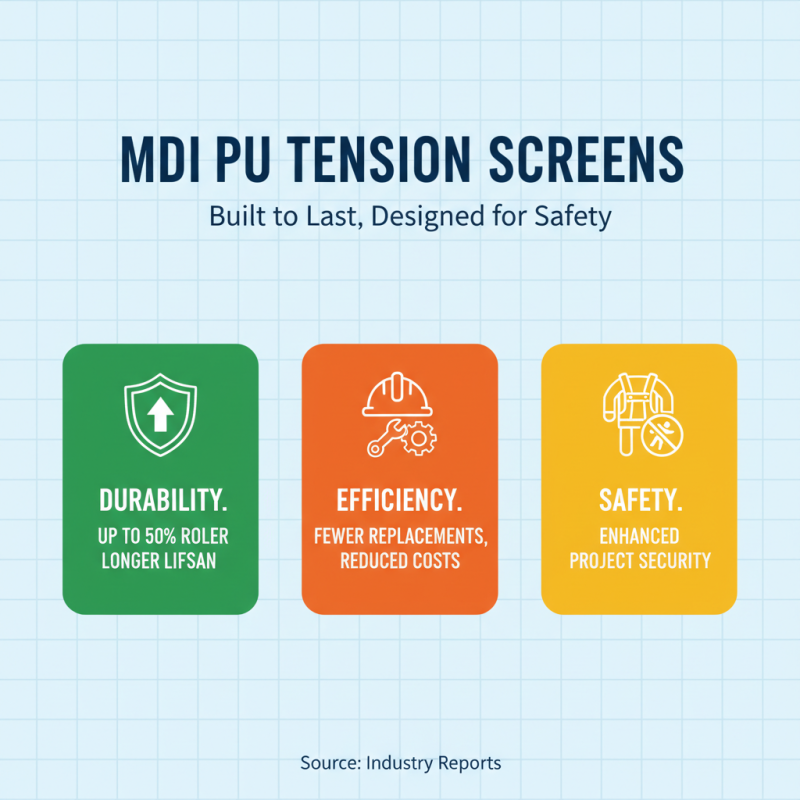
MDI PU Tension Screens have become increasingly popular in construction projects. These screens offer several compelling benefits that improve efficiency and safety. One major advantage is their durability. According to industry reports, MDI PU materials can last up to 50% longer than traditional options. This longevity translates to less frequent replacements and reduced costs over time.

Another critical benefit is flexibility. MDI PU Tension Screens can adapt easily to various project needs. With their lightweight design, these screens are easy to handle and install. However, it’s essential to consider that improper installation may lead to issues. Regular training for construction workers is advisable. This ensures everyone understands how to utilize the screens effectively while minimizing safety risks.

Tip: Always evaluate the site conditions before installation. MDI PU screens work best in stable environments. A poorly prepared site can negate the advantages of using these screens. Watch for signs of wear and tear. Early detection can save time and money. Overall, incorporating MDI PU Tension Screens into your projects offers significant benefits, but careful planning and execution are key.

Comparative Durability of MDI PU Tension Screens vs. Traditional Materials

MDI PU tension screens are emerging as a superior choice for various construction and industrial projects. One key factor is their durability compared to traditional materials like metal and fiberglass. According to industry reports, MDI PU screens can withstand significant stress and strain. Test results indicate that they have a tensile strength of over 3000 psi, which is about 25% higher than traditional options.

Moreover, MDI PU tension screens exhibit excellent resistance to weather and chemicals. They can endure extreme temperatures ranging from -40°F to 180°F. In contrast, metal screens may corrode, and fiberglass can become brittle over time. In a side-by-side comparison, MDI PU shows less surface degradation after prolonged exposure to UV light and harsh chemicals.

While the advantages are clear, it’s worth noting the learning curve for some users in adapting to this newer material. Technical training might be necessary for effective installation and maintenance. MDI PU tension screens might have a higher initial cost, but the long-term savings on repairs and replacements often outweigh the upfront investment.

Cost-Effectiveness of MDI PU Tension Screens in Long-Term Applications

Why Choose Mdi Pu Tension Screen for Your Projects?

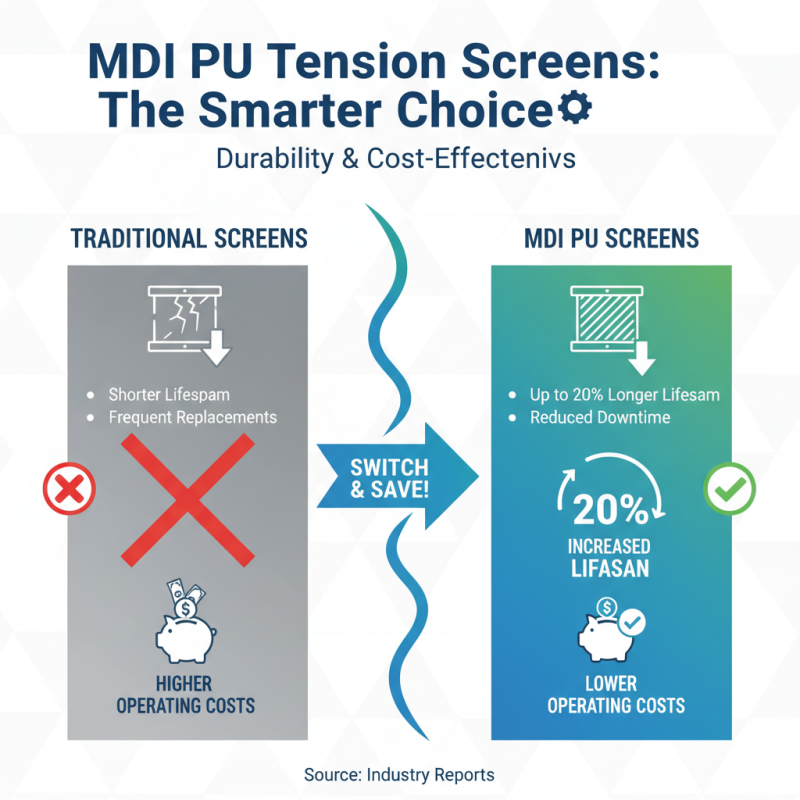
MDI PU tension screens are becoming increasingly popular in various industries. Their cost-effectiveness over time is a key factor for consideration. According to industry reports, these screens last significantly longer than traditional options, reducing replacement costs. Typically, MDI PU screens can provide a lifespan of up to 20% longer compared to alternatives.

In long-term applications, the financial advantages stack up. Maintenance costs are lower too, as MDI PU screens require less frequent servicing. A study by an industry research firm indicates that long-term savings can reach as much as 30%. However, upfront costs might be perceived as higher. This initial investment can deter some projects. Yet, the overall return on investment often justifies the decision.

Continuing to rely on less durable materials may seem cheaper initially. However, repeated replacements lead to increased expenses over time. Many projects overlook this, focusing only on immediate costs. Choosing MDI PU tension screens encourages a more sustainable approach. Not only does it provide financial savings, but it also enhances operational efficiency. Making this choice could lead to long-term benefits.

Industry Performance Data Supporting MDI PU Tension Screen Usage

When considering screen choices for your projects, MDI PU tension screens stand out. Industry performance data shows their exceptional durability under tough conditions. They resist wear and tear, making them a strong choice for various applications. In construction and industrial sectors, these screens demonstrate reliability that many traditional options lack.

Tip: Always analyze specific project demands. Determine the environmental conditions your screens will face. This ensures you select the right materials and configurations.

Research indicates that MDI PU tension screens minimize downtime during operations. Their easy installation process can save both time and money. However, some users reported initial difficulties in adjusting tension. It’s essential to ensure proper calibration for optimal performance.

Tip: Conduct regular maintenance checks. Assess the tension levels periodically to maximize the lifespan of your screens. Regular monitoring can prevent costly replacements down the line.

Environmental Impact and Sustainability of MDI PU Tension Screens

MDI PU tension screens offer significant advantages for projects focused on environmental sustainability. These screens are made from materials that show a lower ecological footprint compared to traditional options. According to a 2022 report from the Global Environmental Sustainability Consortium, the production of MDI PU materials emits 30% fewer greenhouse gases than conventional polyurethane.

The longevity of MDI PU tension screens also plays a role in sustainability. With a lifespan that can reach up to 15 years, they require less frequent replacement. This reduces waste generation significantly. A study conducted by the Building Research Institute indicates that durable materials can decrease the demand for raw resources by up to 40%.

However, the initial production process still has its drawbacks. The energy consumption during manufacturing is higher than anticipated, prompting discussions about renewable energy use in production.

In terms of end-of-life disposal, MDI PU is not as easily recyclable as other materials. This presents a challenge for the industry. As projects strive for 100% sustainability, this limitation calls for innovation. Exploring biobased alternatives or improved recycling technologies could be a solution. Balancing practicality with environmental goals remains an ongoing conversation in the construction sector.