Why Choose Mdi Pu Tension Screen for Your Business Needs?
In the competitive landscape of modern business, effective screening solutions are crucial. The demand for durable and efficient screening has led to the popularity of Mdi Pu Tension Screen. According to industry reports, businesses using high-quality tension screens experience up to 30% increases in productivity. This statistic underscores the importance of choosing the right equipment.
Mdi Pu Tension Screens offer remarkable resistance to wear and tear. Their polyurethane material ensures longevity, making them a smart investment. Companies report reduced maintenance costs and downtime, which can be a game-changer. However, some users still face challenges in optimizing screen performance. Understanding specific operational needs is essential to harness the full potential of these screens.
While Mdi Pu Tension Screens deliver commendable results, they may not fit every application perfectly. Not all businesses have the same requirements or conditions. This raises a valid question: Are you fully aware of your screening needs? Balancing quality with cost-effectiveness can be tricky. Therefore, careful evaluation is vital.
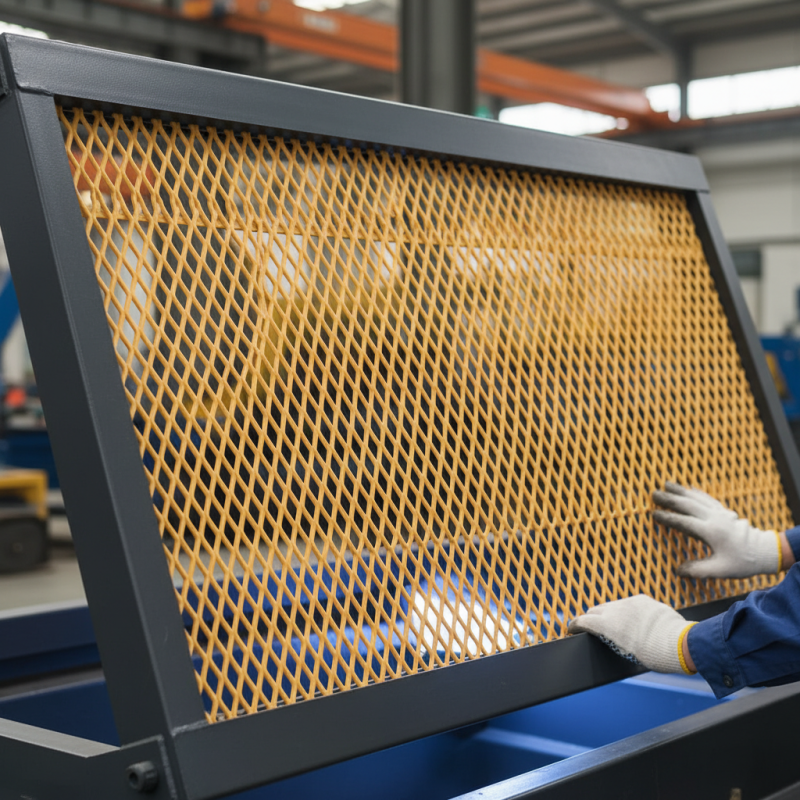
Understanding the Basics of MDI PU Tension Screens
MDI PU tension screens are increasingly popular in various industries. These screens provide excellent durability and performance. They are crafted from high-quality materials that resist wear and tear. Businesses appreciate their ability to handle different materials without compromising on quality.
Understanding the basics of MDI PU tension screens is crucial. They offer flexibility in design. This allows them to adapt to various equipment and settings. The installation process can be straightforward but requires precise measurements. A small mistake can lead to inefficiencies. Regular maintenance is key to maximizing their lifespan.
However, many users overlook this aspect. They might neglect to inspect the screens regularly. This can result in costly downtime and repairs. Balancing functionality and routine checks is essential for optimal performance. With proper attention, MDI PU tension screens can serve businesses well.
Key Features and Benefits of MDI PU Tension Screens
MDI PU tension screens have become essential for many businesses, particularly in industries like mining and construction. These screens offer excellent durability and resistance, which can vastly improve operational efficiency. According to industry reports, more than 70% of businesses experience a noticeable increase in material flow when using high-quality tension screens. This improvement can significantly reduce downtime due to maintenance issues.
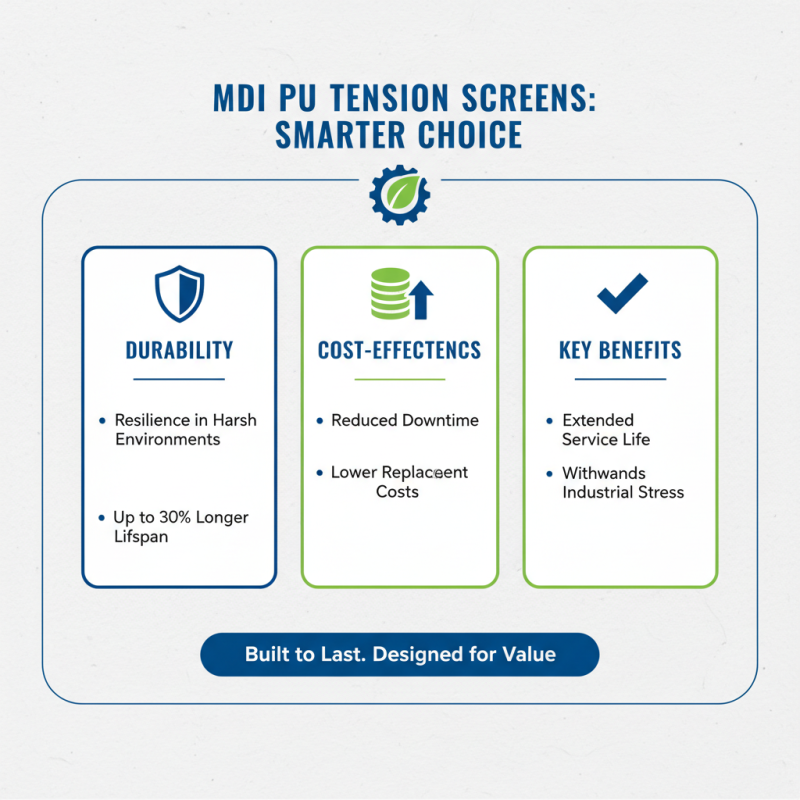
The design of MDI PU tension screens facilitates easy installation and replacement. This aspect is crucial, especially in high-demand environments. Replacing a screen can often take hours, leading to costly delays. However, many facilities report that switching to tension screens allows for quicker changes. Furthermore, MDI PU screens can endure harsh conditions, potentially lasting longer than traditional screens. Some estimates suggest a lifespan increase of over 30%.
Although the benefits are impressive, it's important to note areas for improvement. Not all tension screens are created equal. Poor installation can lead to premature failure. Similarly, some businesses overlook the need for routine maintenance. This negligence can negate the advantages offered by high-quality screens. Constant evaluation is crucial in ensuring the most efficient operation, as mistakes can cost more in the long run.
Key Features and Benefits of MDI PU Tension Screens
Applications of MDI PU Tension Screens in Various Industries
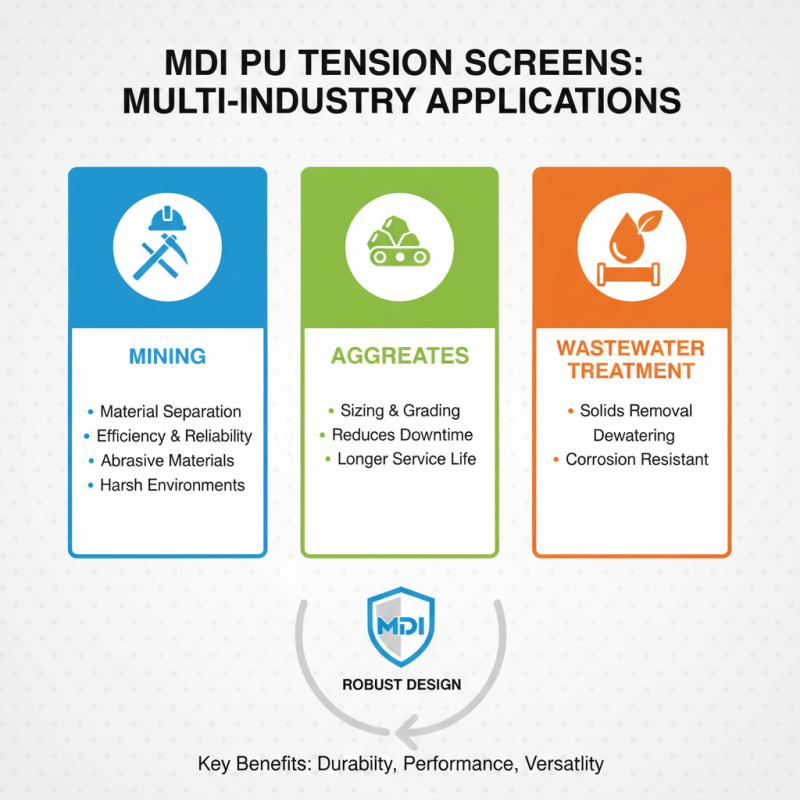
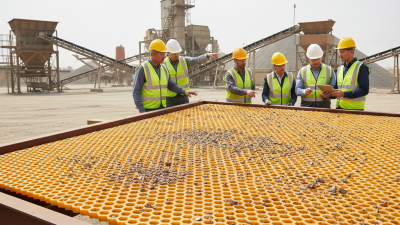
MDI PU tension screens have diverse applications across multiple industries. They excel in sectors like mining, aggregates, and wastewater treatment. In mining, these screens effectively separate materials, ensuring both efficiency and reliability. Their robust design handles abrasive materials well, making them suitable for harsh environments.
In the aggregates industry, MDI PU tension screens contribute to effective sorting and classification. They improve the quality of products by providing precise screening. However, the efficiency can vary depending on the material composition. It’s important to regularly assess their performance to achieve desired results.
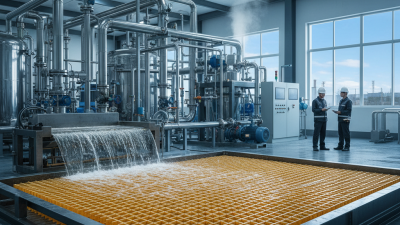
Wastewater treatment facilities also benefit from these screens. They help in removing unwanted particles and enhance the clarity of treated water. Still, operators must be vigilant. If not maintained properly, the screens can clog, leading to inefficiencies. Regular monitoring and adjustment are crucial for optimal operation.
Comparing MDI PU Tension Screens with Other Screen Types
When it comes to choosing a tension screen, MDI PU is gaining attention. Compared to traditional screens, MDI PU offers enhanced durability and flexibility. These screens resist wear and tear better than many alternatives. They maintain their shape under stress, which is crucial for consistent performance.
Not all tension screens are created equal. For instance, polyester screens are common but can lack the strength of MDI PU. They may stretch over time, leading to decreased efficiency. Metal screens are durable, but they can be heavy and difficult to handle. MDI PU strikes a balance between these two. It’s lightweight yet robust, making it easier to install and maintain.
**Tip:** Evaluate your specific business needs before choosing a screen type. Consider factors like material strength, installation ease, and long-term costs.
Some users may face challenges with MDI PU screens. The initial investment might be higher. Also, not all projects could benefit from their unique properties. Reflecting on these factors will help make a better-informed choice.
**Tip:** Test different screen types before deciding. Hands-on experience can clarify what works best for your operation.
Why Choose Mdi Pu Tension Screen for Your Business Needs? - Comparing MDI PU Tension Screens with Other Screen Types
| Screen Type |
Material |
Durability |
Efficiency |
Cost |
| MDI PU Tension Screen |
Polyurethane |
High |
Very High |
Moderate |
| Wire Mesh Screen |
Steel |
Moderate |
Moderate |
Low |
| Perforated Plate Screen |
Metal |
Moderate |
Low |
Low |
| Synthetic Tension Screen |
Synthetic Fibers |
Low |
Moderate |
Moderate |
 No. 14, Building 2, No. 367 Beijing Road, Chengdu Economic and Technological Development Zone (Longquanyi District)